Types of RFID Readers and Their Applications
What Are RFID Readers?
RFID Readers are electronic devices that communicate with RFID tags using radio frequency signals to capture, process, and transmit data in real time. Unlike barcode scanners, RFID readers do not require line-of-sight scanning, making them faster and more scalable for modern enterprises.
Companies like Salvonic, known for delivering advanced RFID and identity management solutions, help organizations deploy reliable RFID readers tailored to operational demands. Businesses implementing RFID readers experience improved inventory accuracy, reduced shrinkage, stronger compliance, and greater visibility across supply chains.
Understanding the Types of RFID Readers and Their Applications is essential for selecting the right technology for specific business environments.
Introduction
RFID technology is reshaping inventory management, asset tracking, and secure authentication systems across industries. From warehouse automation to healthcare inventory and fleet tracking, RFID readers enable seamless data flow and operational control.
Organizations adopting RFID infrastructure often partner with experienced solution providers like Salvonic, ensuring that hardware, antennas, and backend systems are properly integrated for long-term performance.
This guide explores different types of RFID readers, their applications, and use cases across industries like retail management, file tracking solutions, apparel tracking, and more.
Types of RFID Readers and Their Applications
1. Fixed RFID Readers
Fixed RFID readers are stationary devices installed at entry or exit points and warehouse docks. They automatically capture RFID tag data within their range.
Best For:
- Warehouse management (real-time inventory updates)
- Supply chain automation (monitoring goods movement)
- Retail store automation (tracking stock levels)
Application Example:
Large warehouses use fixed RFID readers to monitor pallet movement in real time. Companies working with Salvonic often deploy fixed RFID systems integrated with ERP software to ensure precise inventory synchronization.
When analyzing the Types of RFID Readers and Their Applications, fixed readers are ideal for high-volume environments.
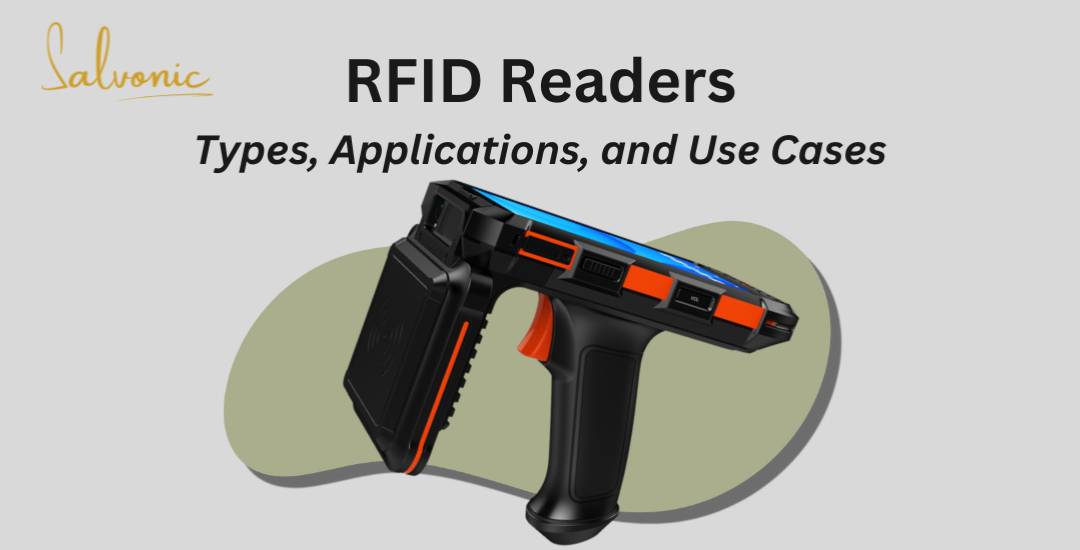
2. Handheld RFID Readers
Handheld RFID readers are portable devices used for on-the-go inventory checks and asset audits.
Best For:
- Apparel tracking
- Retail inventory audits
- File tracking solutions
Retailers use handheld RFID readers to perform rapid stock verification. Solutions supported by Salvonic ensure handheld readers connect seamlessly to centralized inventory platforms.
Understanding these portable devices is critical when evaluating the Types of RFID Readers and Their Applications for flexible operations.
3. Integrated RFID Readers
Integrated RFID readers combine the antenna and reader into a single compact unit.
Best For:
- POS systems
- Self-checkout kiosks
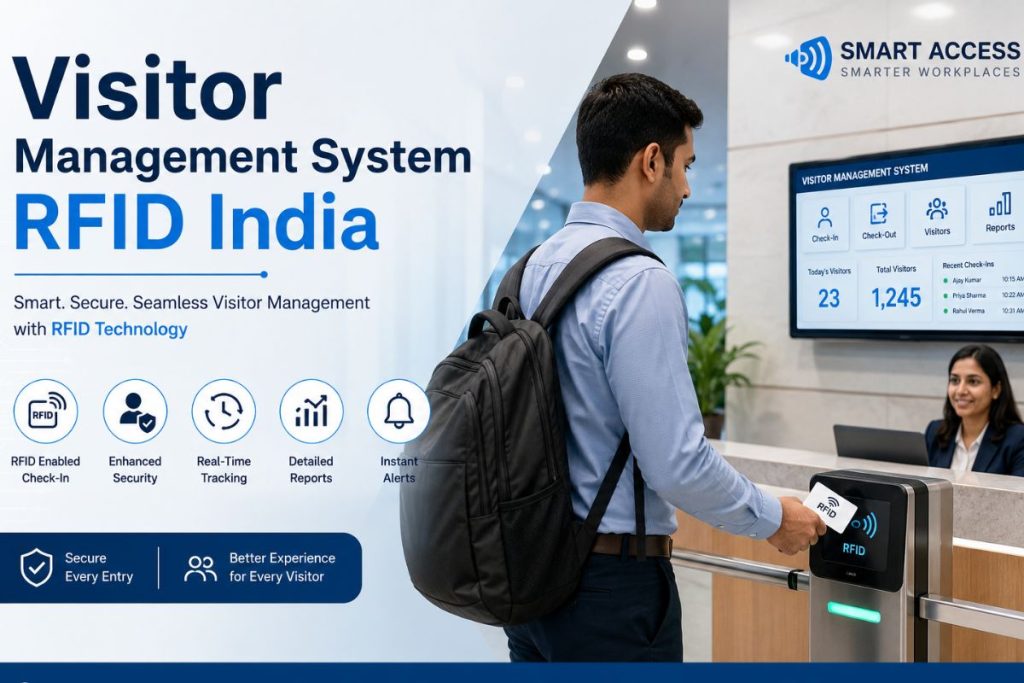
- Access control systems
Shopping malls and corporate offices use integrated readers for contactless payments and secure entry authentication. Salvonic provides scalable deployment support for such integrated environments.
4. USB RFID Readers
USB RFID readers are plug-and-play desktop devices.
Best For:
- Library automation
- Attendance tracking
- Retail billing counters
These systems offer cost-effective implementation for smaller operations exploring RFID technology.
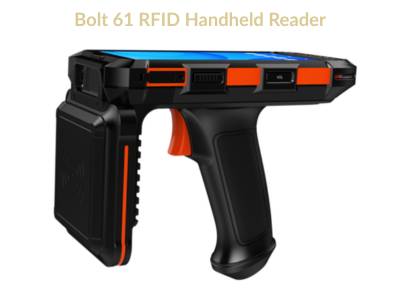
Bolt 61 RFID Handheld Reader for efficient stock audits. |
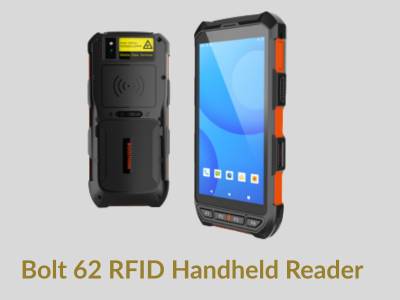
Bolt 62 RFID Handheld Reader designed for industrial mobility. |
5. Mobile RFID Readers
Mobile RFID readers are smartphone-compatible scanners that connect via Bluetooth or Wi-Fi, offering high flexibility.
Best For:
- Fleet management
- Construction asset tracking
- Event ticket scanning
In logistics operations, mobile RFID readers enable real-time fleet visibility. Businesses partnering with Salvonic benefit from optimized read performance even in high-interference environments.
Industries Benefiting from RFID Readers
Warehouse & Inventory Management
- Automated stock tracking reduces manual counting
- Minimized shrinkage through real-time visibility
Retail & Apparel Management
- Smart checkout systems for faster transactions
- RFID-tagged apparel tracking prevents theft
Healthcare & Pharmaceutical Inventory
- Medication tracking ensures regulatory compliance
- Patient identification reduces hospital errors
File Tracking Solutions
- RFID-enabled file cabinets streamline record retrieval
- Secure document tracking prevents data loss
Vehicle & Fleet Management
- RFID-enabled toll collection
- Fleet tracking improves route optimization
Event & Ticketing Management
- RFID wristbands speed up event entry
- Automated guest verification improves security
How RFID Readers Work
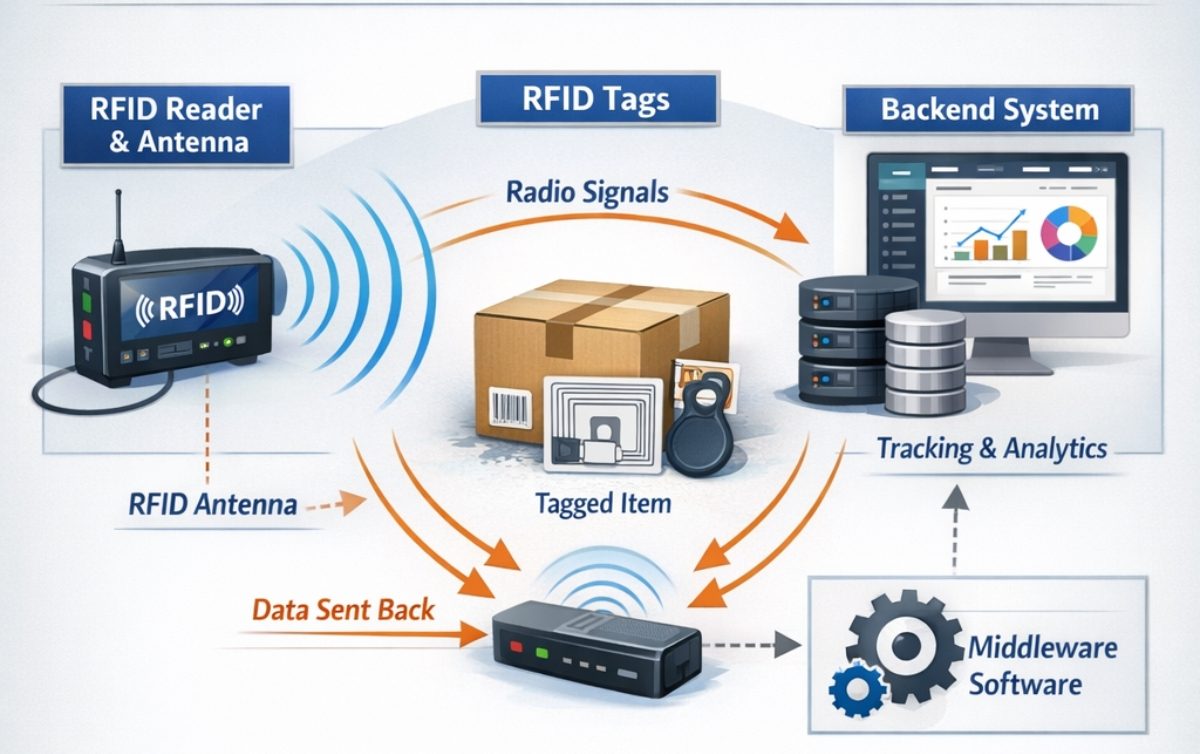
RFID readers transmit radio waves through antennas. When an RFID tag enters the signal field, it reflects data back to the reader. The reader processes and forwards this information to backend systems for tracking and analytics.
Key Components:
- RFID Reader
- RFID Antenna
- RFID Tags
- Middleware software
Technology providers like Salvonic ensure that these components work together seamlessly, improving read accuracy and minimizing interference in warehouses and retail environments.
Advantages of Using RFID Readers in Modern Businesses
- Real-time inventory visibility
- Faster scanning compared to barcodes
- Reduced human errors
- Enhanced theft prevention
- Improved compliance and traceability
- Lower operational costs over time
The Advantages of Using RFID Readers in Modern Businesses extend beyond efficiency. They provide valuable operational intelligence for data-driven decision-making.
Conclusion
The Types of RFID Readers and Their Applications vary depending on operational goals, scale, and industry demands. With increasing adoption across multiple industries, RFID technology continues to redefine enterprise efficiency.
Organizations looking to modernize their operations can confidently explore RFID deployment strategies supported by experienced providers like Salvonic, ensuring reliable and scalable implementation.
Frequently Asked Questions
What are the Types of RFID Readers and Their Applications?
The Types of RFID Readers include fixed readers, handheld readers, integrated readers, USB readers, and mobile readers used across warehouses, retail, healthcare, logistics, and file tracking systems.
Which industries benefit most from RFID readers?
Industries benefiting from RFID readers include warehouse management, retail, healthcare, logistics, government record management, and fleet operations.
How do RFID readers work?
RFID readers transmit radio signals to RFID tags. The tag reflects data back to the reader, which then sends the information to backend systems for tracking and analytics.
What are the advantages of RFID readers?
RFID readers provide faster scanning, real-time visibility, improved accuracy, theft prevention, automation, and reduced operational costs.
Ready to implement intelligent tracking systems?
Partner with Salvonic to deploy scalable RFID readers tailored to your operational needs.
👉 Request a Consultation
👉 Speak to an RFID Expert
👉 Get a Custom Deployment Plan