RFID Access Control System India: How Smart Cards and RFID Are Replacing Traditional Keys
What is an RFID Access Control System?
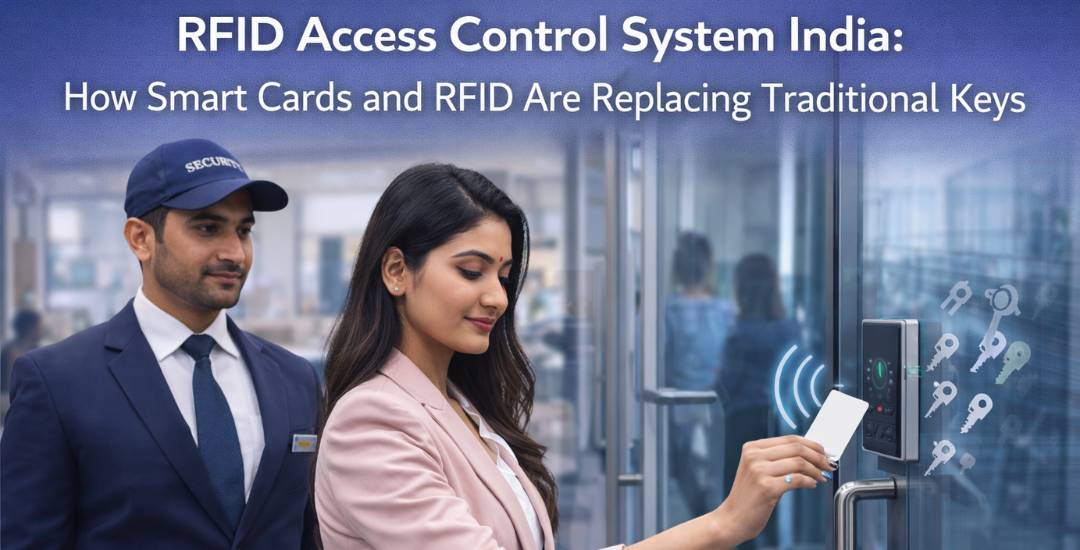
An RFID access control system India businesses and institutions deploy is a security infrastructure that uses Radio Frequency Identification technology to manage and authenticate entry to buildings, floors, server rooms, gates, and restricted areas — replacing mechanical keys, combination locks, and traditional pin-and-tumbler systems with electronic credentials that can be issued, modified, and revoked instantly.
Unlike a mechanical key that provides identical, irrevocable access to anyone who holds it, an RFID-based smart card access control system assigns each credential a unique electronic identity — enabling per-person access policies, time-restricted permissions, multi-zone access rules, and complete audit trails of every entry event.
Companies like Salvonic — India’s leading RFID and card technology manufacturer — provide organisations with the smart cards, proximity cards, RFID tags, and card printers needed to build robust access control infrastructure.
RFID Access Control System India: Why Corporate India Is Upgrading in 2025
India’s corporate infrastructure is undergoing a rapid security transformation. IT parks in Bengaluru, Hyderabad, Chennai, and Pune are mandating electronic access control for ISO 27001 compliance and data protection requirements.
The cost of contactless access control India deployments has fallen sharply. A complete RFID-based system covering an office floor can now be deployed for a fraction of what equivalent systems cost a decade ago.
This guide covers everything facilities managers and IT security teams need to know about deploying a modern office building security RFID system.
RFID Access Control System India: Key Applications and Use Cases
1. Office and Corporate Campus Access
The most common application of smart card access control in India is corporate office entry management.
- Main entrance turnstiles and speed gates with RFID reader integration
- Floor-level access control restricting zones by department
- Server room and data centre access with dual-factor authentication
- Executive and boardroom access with time-restricted permissions
- Employee ID card access system doubling as printed photo ID and RFID access credential
2. Manufacturing Plant and Industrial Facility Security
Manufacturing plants use office building security RFID systems for contractor management, hazardous zone access control, and shift-change gate management.
- Shift-gate access control for factory workers
- Hazardous zone access restriction
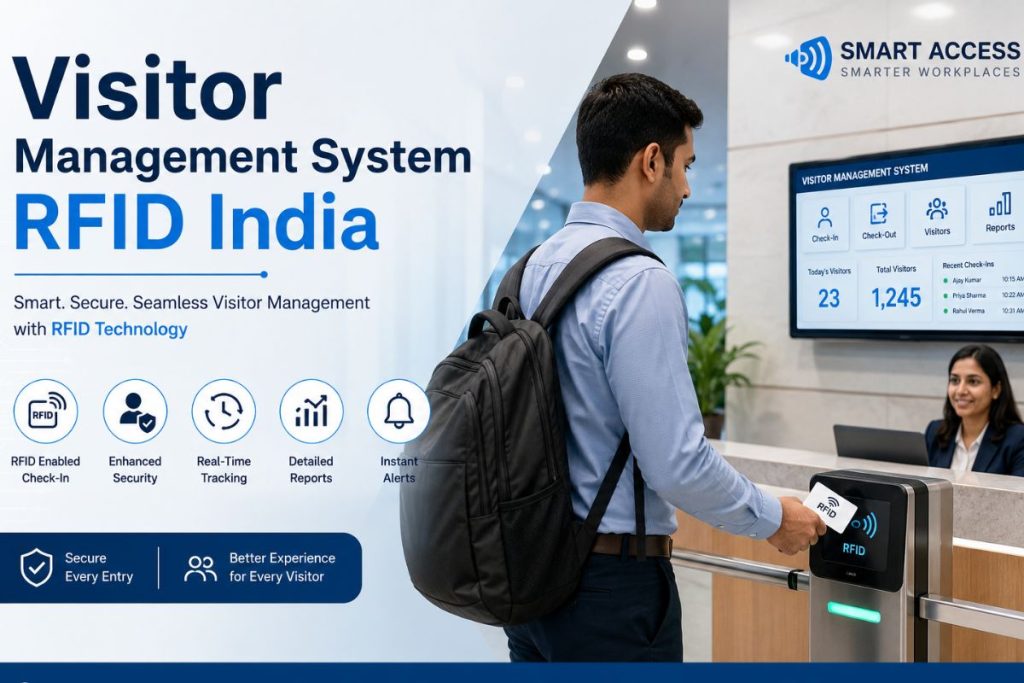
- Contractor and visitor management
- Vehicle gate access using UHF RFID windshield tags
- Integration with attendance systems
3. Residential and Gated Community Access
Large residential developments increasingly deploy proximity card door access systems for residents and visitors.
- Main gate access for residents and authorised vehicles
- Lift access restricted by programmed cards
- Clubhouse and gym access via RFID membership cards
- Visitor RFID credentials issued at security desk
4. Educational Institutions
Universities and schools deploy employee ID card access system infrastructure for identity management and restricted zone control.
- Campus gate access for students and staff
- Library and laboratory access control
- Hostel security with night access restrictions
- Exam hall entry control
5. Healthcare Facilities
Hospitals deploy contactless access control India systems for infection-safe secure entry.
- ICU and OT restricted access
- Pharmacy storage security
- Medical record room access control
- Staff ID cards functioning as access credentials
 |
 |
How an RFID Access Control System India Works
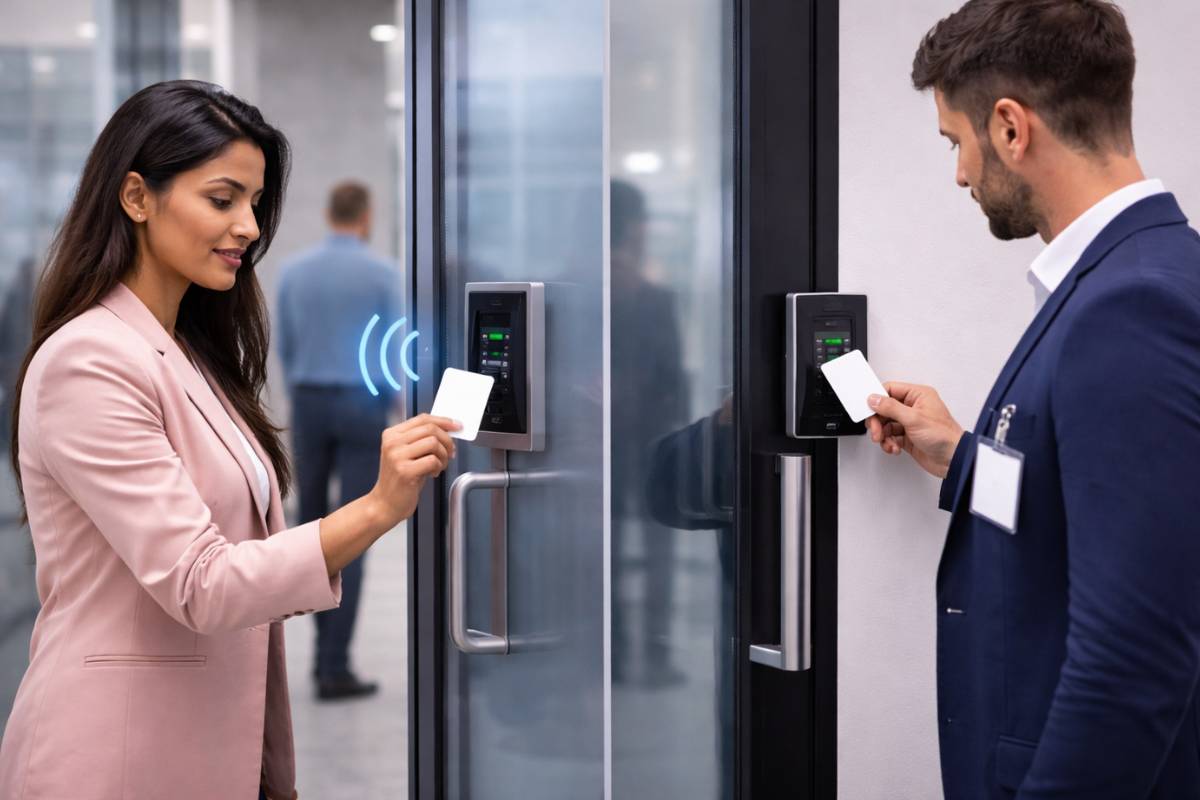
RFID Credential: Each user receives a smart card, proximity card, or RFID tag containing a unique electronic identifier.
RFID Reader: Readers mounted at doors scan the credential when presented.
Access Controller: The controller verifies the credential against its database and unlocks the door if authorised.
Electric Lock or Turnstile: Receives the unlock signal from the controller.
Access Software: Administrators manage permissions and audit logs.
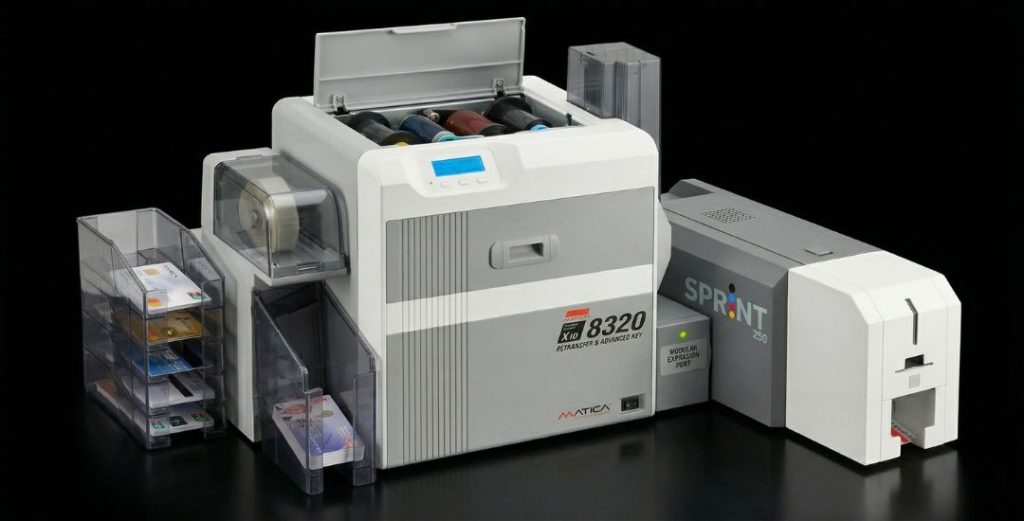
Card Printer: Salvonic printers like Sprint 230 produce the employee ID card while encoding the RFID chip.
Industries Deploying RFID Access Control
Information Technology
IT parks and data centres use RFID systems for ISO 27001 compliance and secure zone access control.
Special Economic Zones
SEZs require controlled entry logging for regulatory compliance.
Pharmaceutical Manufacturing
Restricted clean-room access for GMP compliance.
Banking and Financial Services
RFID systems protect strong rooms and server facilities.
Hospitality and Co-working Spaces
Hotels and coworking offices use RFID cards for room and member access.
Advantages of RFID Access Control
- Instant credential issuance and revocation
- Full audit trail of access events
- Time-restricted access policies
- Lost credentials disabled immediately
- Integration with HR and visitor systems
- Scalable for large campuses
- Lower long-term cost than key systems
- Contactless hygienic operation
Conclusion
As Indian organisations upgrade their physical security infrastructure, RFID access control systems are becoming the new standard. From proximity card door access to smart card access control for enterprise campuses, RFID provides scalable and secure building access management.
Salvonic supplies the complete ecosystem of smart cards, RFID credentials, card printers, and readers required to deploy modern access control systems.
Frequently Asked Questions
What is an RFID access control system?
An RFID access control system uses smart cards or RFID credentials to authenticate entry to buildings and restricted areas.
Which smart card is commonly used in India?
Mifare Classic 1K or 4K cards operating at 13.56 MHz are the most widely used credentials.
Can proximity cards work with existing systems?
Yes. 125 kHz proximity cards remain compatible with most legacy access control readers.
What is contactless access control?
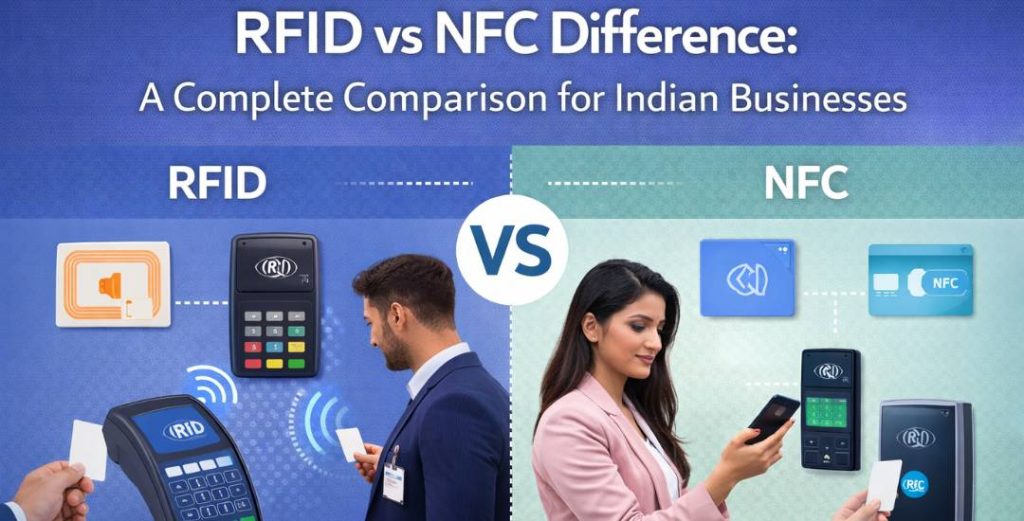
Contactless systems authenticate access without physical card contact using RFID or NFC technology.
What cards does Salvonic provide?
Salvonic supplies Mifare cards, proximity cards, UHF RFID cards, chip cards, and encoded employee ID cards.
Ready to Upgrade Your Building’s Security?
Partner with Salvonic for smart cards, RFID credentials, card printers, and readers.
👉 Explore Salvonic Smart Cards
👉 View RFID Card Printers
👉 Request a Consultation