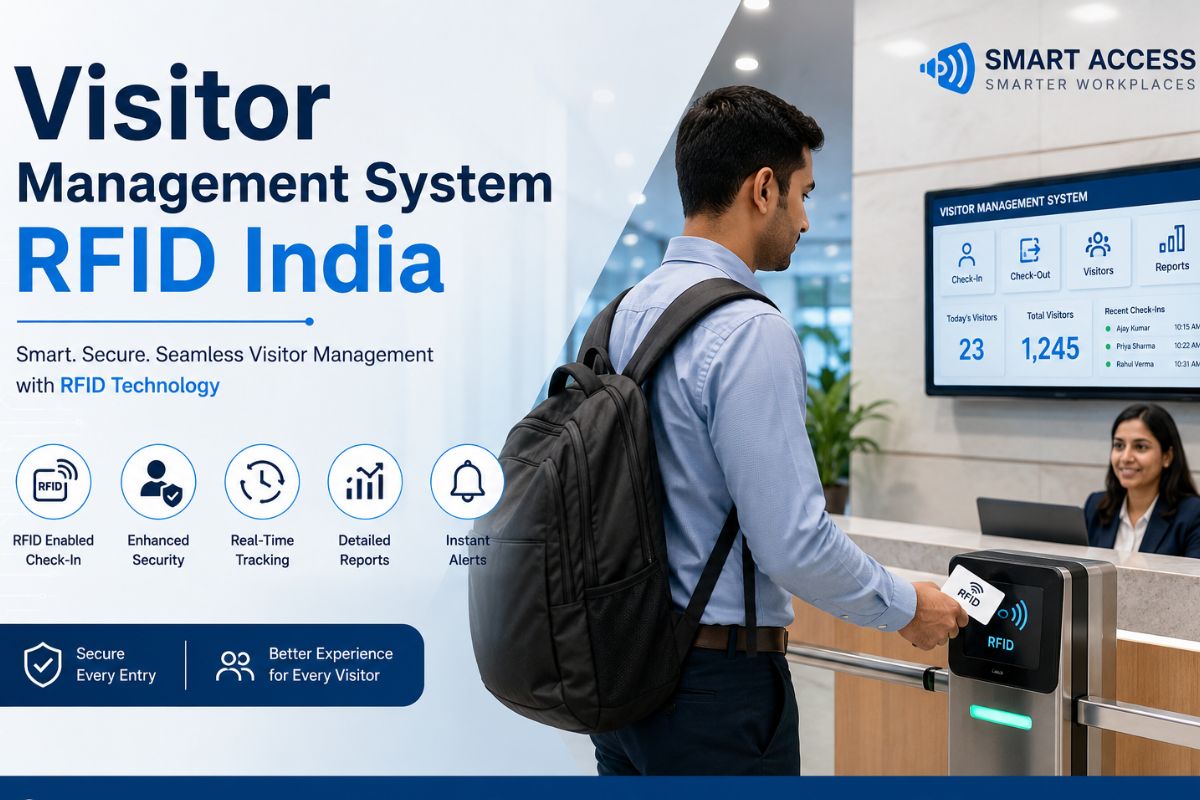
A visitor management system RFID India replaces the handwritten sign-in register, printed visitor badge, and manual escort process with an instant, contactless, fully digital visitor workflow – where visitors are pre-registered by their host, identified at reception with an RFID credential, photographed and badged in seconds, and tracked throughout the facility with an automatic overstay alert if they don’t exit by their approved time.
For Indian corporate offices, hospitals, IT parks, manufacturing facilities, and government buildings where visitor footfall runs into hundreds per day, a well-deployed visitor management system RFID India transforms reception from a bottleneck into a seamless, secure experience.
Why Manual Visitor Registers Are a Security Gap
The paper visitor register – still used in the majority of Indian offices – is a security documentation system that fails on every dimension that matters. Handwriting is illegible. ID verification is inconsistent. Visitors who have been asked not to return are freely admitted because no one checks previous visit history. The paper record cannot be searched, cannot trigger automatic alerts, and is not linked to the access control system that controls building entry. A visitor who signs in on paper can enter a floor where they have no business, and their presence will only be discovered retrospectively – if the paper register is reviewed at all.
A visitor management system RFID India addresses all of these failures simultaneously: pre-registration requires host approval before any visitor can enter, RFID visitor credentials are issued at reception and linked to the visitor’s photographed face, access is restricted to pre-authorised zones only, and every movement event is timestamped and logged against the visitor’s identity record.
How a Visitor Management System RFID India Works: Complete Workflow
RFID Visitor Pass India: Types of Visitor Credentials and When to Use Each
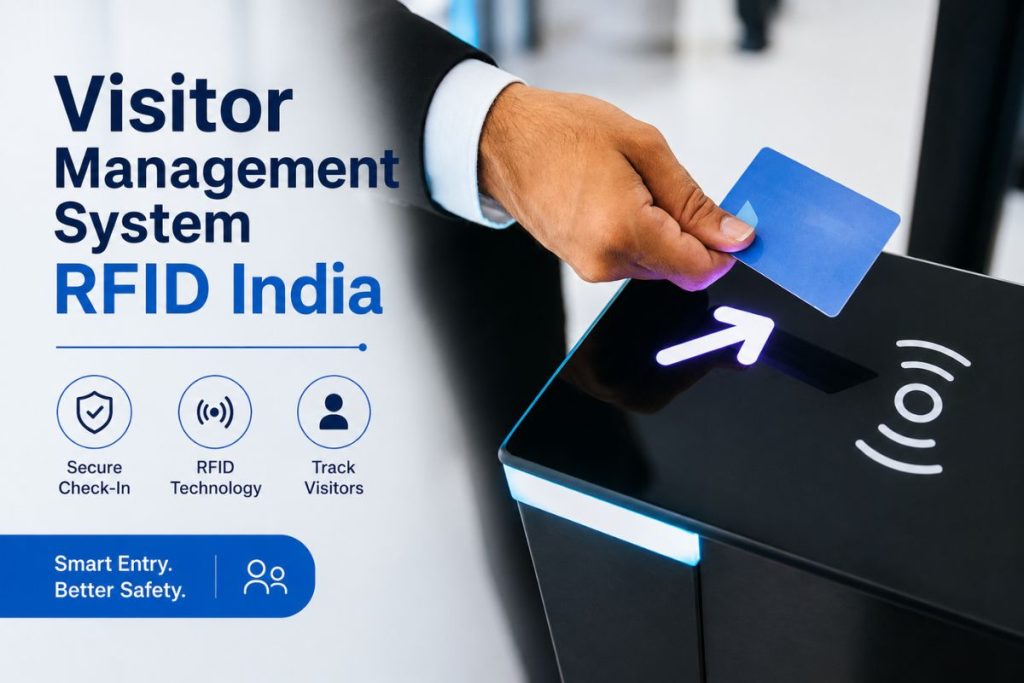
Choosing the right credential type for your RFID visitor pass India programme determines both the security level and the operational cost of your visitor management system:
| Credential Type | Best For | Cost | Security |
|---|---|---|---|
| Mifare 1K Reusable Card | High-frequency visitor operations where cards are collected at exit and reused | Rs. 30-80 per card (reused 50-100x) | High – encrypted, access-controlled |
| Sticky Card (Single Use) | Sites where collecting cards on exit is impractical; card destroyed at exit | Rs. 5-15 per card | Medium – suitable for low-security zones |
| RFID Wristband Tag | Healthcare, events, manufacturing where a card lanyard is impractical | Rs. 20-50 per wristband | Medium-High – tamper-evident |
| Proximity Card (Reusable) | Sites with existing 125 kHz reader infrastructure | Rs. 15-40 per card (reused) | Low – no encryption, OK for low-risk access |
Best practice: For contractor and vendor management – where the same individual visits multiple times per month – a named reusable Mifare card issued to the contractor and collected at the end of each visit provides the best balance of security and operational efficiency.
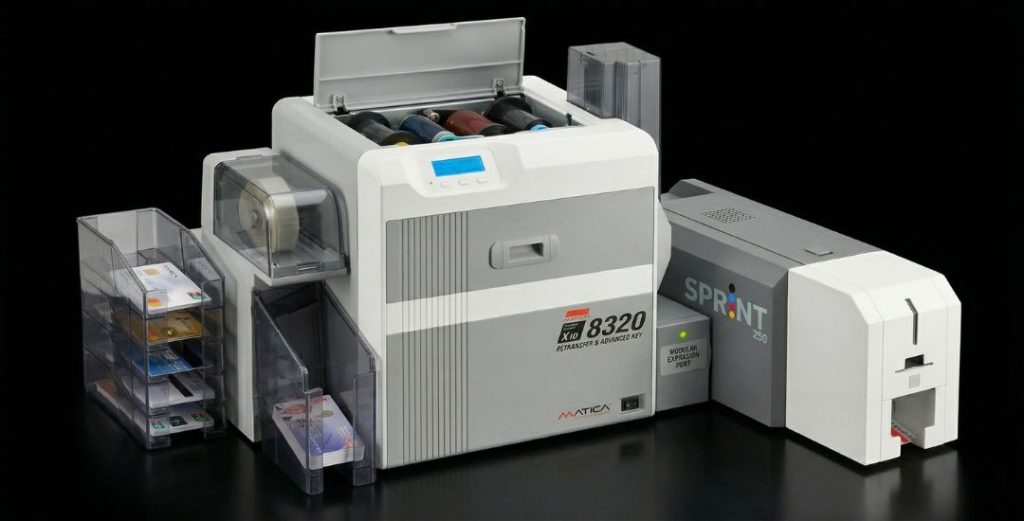
Salvonic supplies all these credential types with professional photo printing capability via the Sprint 230 card printer. View Salvonic card printers.
Digital Visitor Management India: Integration with HR, Access Control, and Watch Lists
A fully integrated digital visitor management India system connects with three enterprise systems to create a seamless, secure visitor experience: the access control system (so visitor badges automatically have correct floor and zone permissions), the HR employee directory (so pre-registration requires a valid host employee record and sends approval requests to the host), and a national/organisational watch list database (so known restricted individuals are flagged at the point of pre-registration or ID verification, before they reach the reception desk).
The watch list integration is particularly valuable for manufacturing facilities, pharmaceutical plants, and financial institutions – where the risk of industrial espionage, competitor intelligence gathering, or regulatory non-compliance makes it essential to know in advance if a visitor has been denied entry at any group facility. A digital visitor management India system with centralised watch list management prevents an individual denied at one site from simply visiting another site in the same organisation. See how Salvonic supports access control across Indian organisations.
Contactless Visitor ID Card: Post-Pandemic Standard for Indian Workplaces
The COVID-19 pandemic permanently shifted Indian workplace hygiene expectations – and the contactless visitor ID card is one of the lasting infrastructure changes that organisations made and have not reversed. A contactless RFID visitor credential eliminates every high-touch surface in the visitor access workflow: no pen for signing the register, no shared touchpad for biometric check-in, no physical exchange of a printed token at the parking gate.
For hospitals – where visitor infection control is a clinical requirement, not just a hygiene preference – the contactless visitor ID card enables completely hands-free visitor check-in and ward access control. Salvonic’s RFID wristband tags serve as patient visitor credentials in clinical environments, while Mifare cards or sticky cards handle corporate visitor scenarios. Both are issued and encoded using Salvonic’s card printer and DASH desktop reader combination at the reception desk.
RFID Reception Management System: What Salvonic Supplies
Salvonic provides the complete hardware layer for an RFID reception management system – every component from the credential issued to the visitor to the reader at each access point:
Explore all Salvonic RFID products | Contact Salvonic for visitor management RFID.
FAQs About Visitor Management System RFID India
What is a visitor management system RFID India and how is it better than a paper register?
A visitor management system RFID India replaces the paper sign-in register with a digital, RFID-enabled visitor workflow: pre-registration by the host, instant RFID credential issuance at reception, zone-limited access throughout the visit, and automatic overstay alerts. Unlike a paper register, it cannot be altered retrospectively, automatically verifies visitor identity against a watch list, generates real-time security alerts, and provides complete visit audit trails for regulatory compliance.
What is an RFID visitor pass India and how long is it valid?
An RFID visitor pass India is a temporary RFID credential – typically a Mifare card, sticky card, or wristband tag – issued to a visitor at reception and encoded with time-limited, zone-limited access permissions. The pass is valid only for the approved visit window (e.g., 9 AM-5 PM on the visit date) and only for the zones approved by the host. After the visit window expires, the credential automatically becomes invalid at all access readers – even if the visitor is still inside the building.
How does digital visitor management India integrate with access control?
A digital visitor management India system integrates with access control through a shared credential database. When a visitor’s RFID pass is issued at reception, the visitor management system writes the visitor’s access permissions (authorised zones, valid time window) directly to the access control system’s credential database. Every access reader in the facility consults this database in real time – meaning the visitor’s zone and time restrictions are enforced automatically at every door without any manual guard involvement.
What is a contactless visitor ID card and why is it preferred in Indian offices?
A contactless visitor ID card is an RFID-enabled visitor credential that communicates with access readers and check-in kiosks wirelessly – without any physical contact between card and reader. It is preferred in Indian offices post-COVID because it eliminates shared touchpoints (shared pens, shared touchpads), is faster than contact-based alternatives (under 100ms read time), and provides a more professional visitor experience than physical token or paper pass systems.
Can an RFID reception management system handle contractor and vendor visits?
Yes – an RFID reception management system handles contractor and vendor visits through a named recurring visitor credential: a dedicated Mifare card is issued to each regular contractor or vendor, encoded with their standard access permissions, and activated at each visit check-in. The card is deactivated and held at reception during periods when the contractor is not on site. This prevents contractor credentials from being used outside approved visit windows and provides a precise log of each contractor’s on-site hours for invoice verification and security audit purposes.
How much does a visitor management RFID system cost in India?
The hardware cost of a visitor management system RFID India for a 200-person office with one reception desk includes: a Salvonic Sprint 230 card printer (Rs. 30,000-50,000), a DASH desktop reader for credential encoding (Rs. 15,000-25,000), visitor card stock (sticky cards at Rs. 5-15 each or reusable Mifare cards at Rs. 30-80 each), and visitor management software (Rs. 20,000-2,00,000 depending on features and integration depth). Total one-time hardware investment typically ranges from Rs. 70,000-2,80,000 depending on scale and visitor volume.
Ready to replace your sign-in register with a smart RFID visitor workflow?
Explore Visitor Cards & Credentials
View Card Printers
Book a Free Consultation