What is FASTag? How RFID Technology Powers India’s Toll Collection System
What is FASTag?
FASTag is a prepaid electronic tag that enables automatic deduction of toll charges as vehicles pass through toll plazas across India. Built on FASTag RFID technology India relies on, it eliminates the need for cash transactions and dramatically reduces vehicle waiting time at toll booths. A roadside reader scans the tag affixed to the vehicle windshield, deducts the toll amount from the linked bank account, and allows the vehicle to proceed — all within seconds.
Companies like Salvonic, known for manufacturing high-quality RFID tags and readers in India, provide the hardware foundation that makes programmes like FASTag scalable, dependable, and ready for the future of smart transportation.
Understanding what is FASTag and how RFID technology powers India’s toll collection system is essential for vehicle owners, fleet managers, logistics companies, and infrastructure planners seeking to leverage modern highway technology.
FASTag and India’s Toll Collection System
Introduction
India’s highway network spans over 1,46,000 kilometres, and managing efficient toll collection at this scale demands more than manual operations. The National Highways Authority of India (NHAI) introduced FASTag — powered by FASTag RFID technology India — to fully digitise and automate toll payments. Today, FASTag has achieved over 97% penetration across Indian toll plazas, with more than 60 million tags actively in use.
The backbone of this transformation is the electronic toll collection system built on Ultra-High Frequency (UHF) RFID technology operating at 860–960 MHz. Unlike older identification methods, RFID-based FASTag does not require physical contact or line-of-sight scanning. The tag is simply pasted on the inner side of the vehicle’s windshield and communicates wirelessly with the reader as the vehicle moves through the toll lane.
This guide explains how the technology works, the role of UHF RFID in its operation, the benefits it delivers to different stakeholders, and why organisations working with trusted RFID manufacturers like Salvonic are best placed to build reliable tolling infrastructure.
What is FASTag? Understanding How the System Works
1. The FASTag RFID Tag
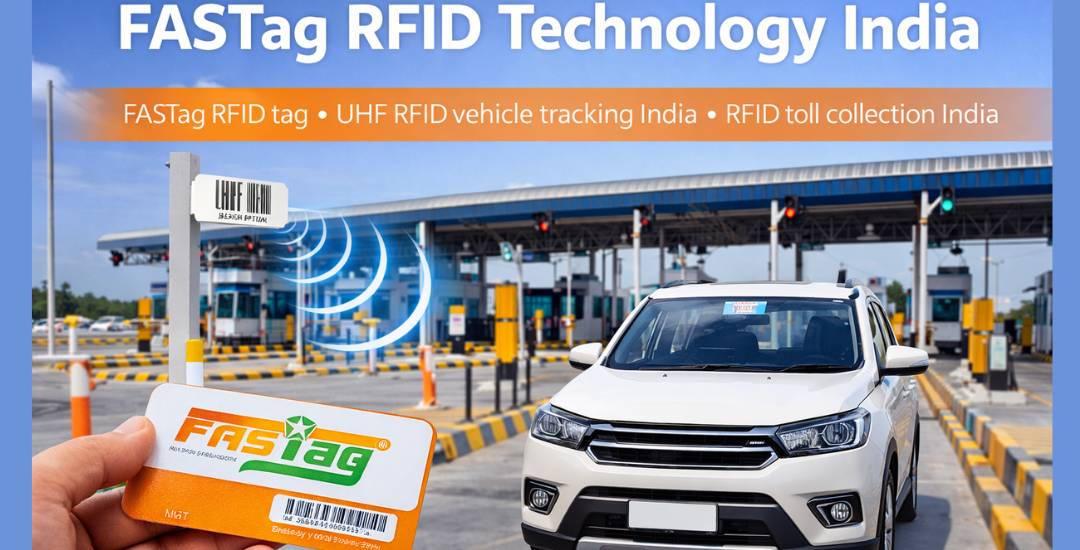
The FASTag RFID tag is a passive UHF RFID label that stores a unique Electronic Product Code (EPC) linked to the vehicle’s registration details and a prepaid wallet. Issued by banks and payment service providers empanelled by NHAI, it draws power from the RF signals emitted by the reader — no internal battery is required, making it a truly maintenance-free identification device.
Key properties of the FASTag RFID tag include:
- Passive UHF RFID operating at 860–960 MHz
- Read range of 5–8 metres under standard toll conditions
- Unique EPC linked to vehicle registration and bank account
- Tamper-evident design to prevent misuse or re-affixing
- Waterproof and UV-resistant for long-term windshield use
2. The RFID Reader at the Toll Plaza
The RFID toll collection India infrastructure depends on fixed UHF RFID readers installed at each toll lane. As a vehicle enters the read zone, the reader emits radio waves that activate the passive tag. The tag responds with its unique ID, which the reader captures and forwards to the backend system for payment processing.
The toll lane reader setup typically includes:
- Fixed UHF RFID reader with directional antenna on gantry or overhead mount
- Loop detectors to sense vehicle presence and trigger the tag read
- Integrated camera for licence plate recognition and mismatch detection
- Boom barrier that responds to transaction status to control lane access
3. The Backend Transaction System
Once the tag ID is captured, the transaction flows through the National Electronic Toll Collection (NETC) system operated by NPCI. The system verifies the tag, checks the balance, deducts the toll, and sends a confirmation SMS to the vehicle owner — completing the entire cycle in under two seconds. This speed and reliability is what sets India’s electronic toll collection system apart as one of the most efficient digital payment deployments in Asia-Pacific.
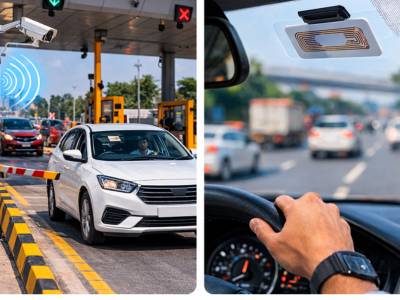 FASTag RFID Tag used in India’s automated toll collection ecosystem. FASTag RFID Tag used in India’s automated toll collection ecosystem. |
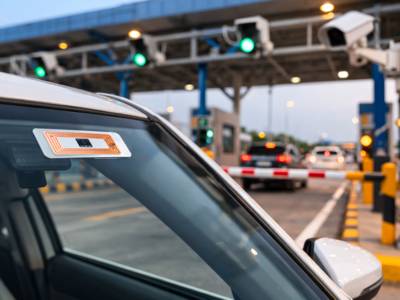 UHF RFID vehicle tracking enables fast, contactless toll and access management. UHF RFID vehicle tracking enables fast, contactless toll and access management. |
UHF RFID Vehicle Tracking India: FASTag and Beyond
UHF RFID vehicle tracking India applications extend well beyond toll collection. The same tag-and-reader architecture is now deployed for vehicle entry and exit management at ports, logistics parks, airport parking zones, defence installations, and smart city transit corridors.
Salvonic’s UHF RFID product range — including the BOLT 61 and BOLT 62 handheld readers and the FLASH series of integrated fixed readers — operates at the same frequency bands used in FASTag deployments. This positions Salvonic’s hardware for any enterprise or government use case requiring high-speed, contactless vehicle identification across India.
Benefits of FASTag and the Electronic Toll Collection System in India
For Vehicle Owners
- Eliminates cash handling at toll booths entirely
- Reduces waiting time at toll plazas from minutes to seconds
- Automatic SMS alerts for every transaction
- Easy recharging via banking apps, UPI, and net banking
- Monthly toll expenditure statements for personal or business records
For Fleet Operators
- Centralised account management across entire vehicle fleets
- Real-time data from RFID toll collection India feeds for trip monitoring
- Cashless payments that reduce driver pilferage risks
- Seamless integration with route planning and fleet management platforms
For the Government and NHAI
- Elimination of revenue leakage at toll plazas
- Reduction in fuel wastage and vehicle emissions from toll queue congestion
- Data-driven traffic flow analysis to support informed highway planning
- Scalable UHF RFID infrastructure reusable for smart highway programmes
How FASTag Works: A Step-by-Step Technical Breakdown
Understanding how FASTag works at a technical level helps businesses, infrastructure developers, and policymakers appreciate why UHF RFID was selected over alternatives like barcodes, Bluetooth, or camera-only number plate recognition.
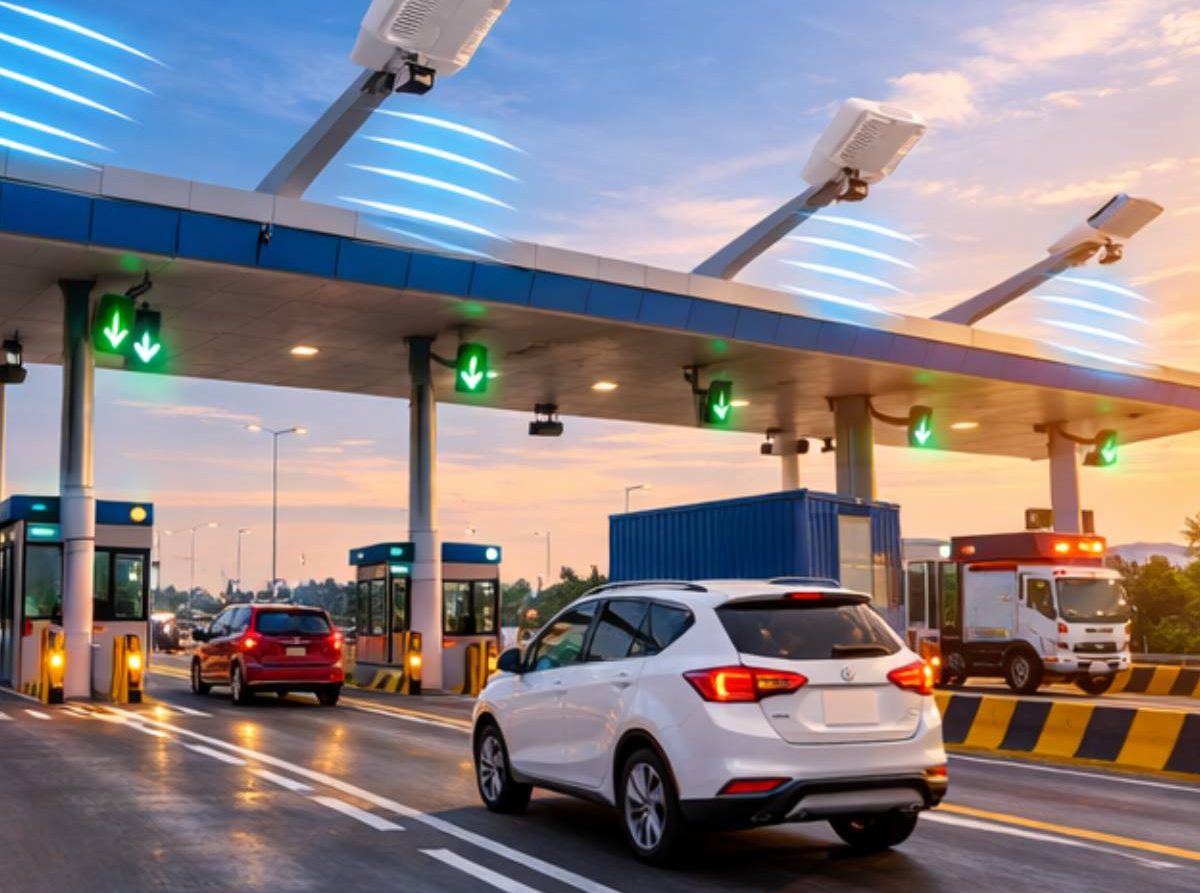
- Step 1 — Tag Activation: As the vehicle enters the read zone (~5–8 m from the antenna), the UHF RFID reader transmits electromagnetic energy. The passive FASTag RFID tag harvests this energy to power its onboard chip.
- Step 2 — Data Backscatter: The chip modulates the reflected signal to encode its unique EPC, which is transmitted back to the reader in milliseconds via a process called backscatter.
- Step 3 — Reader Capture: The RFID reader decodes the backscattered signal and extracts the tag ID. Anti-collision protocols ensure accurate reads even when multiple vehicles are present simultaneously.
- Step 4 — NETC Processing: The tag ID is forwarded to NPCI’s NETC system, which identifies the linked bank account, confirms the balance, and initiates the debit transaction.
- Step 5 — Transaction Confirmation: The toll plaza receives a success signal, the boom barrier opens, and the vehicle owner receives an SMS confirmation — completing the full cycle in under two seconds.
This is the kind of scalable RFID infrastructure that Salvonic helps organisations design and deploy across India. With expertise spanning UHF RFID tags, integrated readers, and identity management systems, Salvonic delivers the hardware backbone for dependable, high-throughput RFID implementations.
Why Choose Salvonic for RFID and FASTag-Compatible Infrastructure?
When deploying RFID-based vehicle identification or building systems aligned with FASTag RFID technology India standards, choosing the right hardware partner directly determines system reliability and long-term operational value.
Salvonic offers:
- Made-in-India UHF RFID tags including windshield, ABS, flexible, and wet inlay variants
- BOLT 61 and BOLT 62 handheld readers for field inspection and vehicle tagging operations
- FLASH integrated UHF readers for fixed-point, high-speed vehicle identification
- DASH UHF desktop reader for back-office tag provisioning and EPC encoding
- End-to-end support from tag issuance through reader installation and system integration
- Scalable solutions for toll plazas, fleet yards, seaports, and smart parking facilities
By partnering with Salvonic, organisations gain not merely RFID hardware — but a complete vehicle identification ecosystem built for India’s growing infrastructure demands.
Applications of FASTag-Style RFID Technology Beyond Toll Collection
The success of India’s electronic toll collection system has unlocked UHF RFID adoption across adjacent sectors.
Port and Logistics Terminals
RFID-based vehicle identification at port gates automates entry logging, reduces truck turnaround time, and improves cargo throughput — the same principles that make FASTag effective at scale.
Smart City Parking Management
Municipal corporations are deploying RFID parking systems where vehicles with pre-registered tags enter designated zones without stopping — a direct extension of the FASTag model.
Airport Vehicle Access Control
Airports use UHF RFID to manage airside vehicle access, ensuring that only authorised vehicles enter sensitive zones with the same read speed and accuracy as toll deployments.
Fuel Station Fleet Management
Fleet operators use RFID at fuel dispensing points to authenticate vehicles, enforce allocation policies, and prevent fraud — mirroring the prepaid and account-linked structure of FASTag.
Advantages of Using FASTag RFID Technology in India’s Transportation Sector
- Cashless, contactless, and fully automated toll payments at highway speed
- Capacity to process thousands of vehicles per hour per lane without congestion
- National interoperability across all NHAI and state highway toll plazas
- Measurable reduction in vehicle emissions from eliminated toll queue idling
- Foundation infrastructure for future smart highway and V2X (Vehicle-to-Everything) programmes
The proven scale of FASTag RFID technology India demonstrates that large-volume, government-mandated RFID deployments deliver results when built on dependable hardware and robust backend systems. With RFID manufacturers like Salvonic and institutional support from NHAI and NPCI, India’s toll collection infrastructure continues evolving into a comprehensive vehicle intelligence network.
Conclusion
FASTag stands as one of the most successful examples of how FASTag RFID technology India can transform a nationwide infrastructure challenge into a seamless, digital-first experience. Understanding how FASTag works reveals the practical elegance of UHF RFID in solving real-world problems at national scale.
From the passive FASTag RFID tag on the windshield to the overhead gantry reader and the NETC payment backend, every component of the electronic toll collection system reflects the precision and reliability that UHF RFID technology delivers. As RFID toll collection India infrastructure expands into ports, airports, and smart cities, organisations that invest in robust RFID systems now will hold a significant operational advantage.
Organisations ready to build RFID-based vehicle identification infrastructure can partner with Salvonic — India’s trusted RFID hardware manufacturer — for scalable, reliable, and future-ready solutions aligned with national digital infrastructure goals.
Frequently Asked Questions
What is FASTag and how does it use RFID technology?
FASTag is a passive UHF RFID tag affixed to a vehicle’s windshield that enables automatic toll deduction without cash. The FASTag RFID tag communicates with roadside readers, which send vehicle data to the NETC backend for instant payment processing — making it the foundation of India’s electronic toll collection system.
How does FASTag work at toll plazas?
Understanding how FASTag works involves three steps: the UHF RFID reader at the toll lane activates the passive tag, reads its unique EPC via radio frequency backscatter, and the NETC backend processes the debit from the linked account — completing the full transaction in under two seconds.
What type of RFID is used in FASTag?
FASTag uses passive UHF RFID technology operating at 860–960 MHz — the same frequency range used across UHF RFID vehicle tracking India applications in ports, logistics parks, and smart parking. This makes the system directly compatible with broader vehicle management use cases beyond toll collection.
Is RFID toll collection available across all highways in India?
RFID toll collection India coverage has reached over 97% of NHAI and state highway toll plazas. FASTag is mandatory for all four-wheelers in India, and the system is interoperable across all participating operators under the NETC framework managed by NPCI.
Can FASTag RFID technology be used beyond toll collection?
Yes. The UHF RFID vehicle tracking architecture behind FASTag is already deployed for port gate management, airport vehicle access, smart city parking, and fuel station fleet control — demonstrating that the electronic toll collection system model scales effectively across multiple high-speed vehicle identification use cases.
Ready to Deploy Reliable RFID Infrastructure for Your Operations?
Partner with Salvonic to deploy industry-grade UHF RFID tags and readers for vehicle tracking, toll management, access control, and beyond.
👉 Request a Consultation
👉 Explore Salvonic RFID Products
👉 Get a Custom Deployment Plan