RFID vs. Barcode: Which is Better for Your Business?
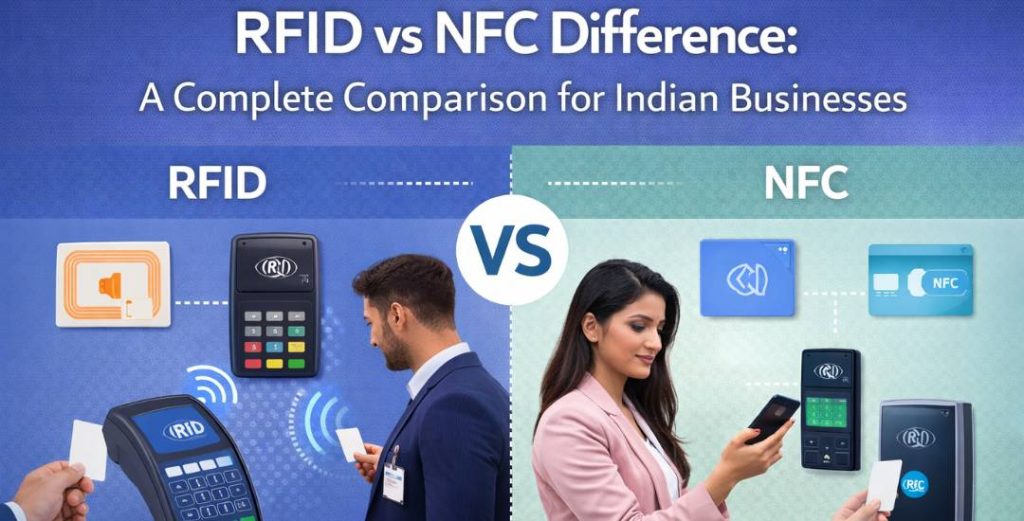
When evaluating RFID vs. Barcode: Which is Better for Your Business?, organizations must consider operational scale, tracking accuracy, automation goals, and long-term technology strategy. Both RFID systems and barcode technology are widely used for inventory management and asset tracking, yet they differ significantly in performance, durability, scalability, and real-time visibility.
Companies implementing advanced RFID infrastructure often partner with experienced providers like Salvonic, who help businesses assess whether RFID or barcode systems align better with their operational complexity and future growth plans.
Introduction
In today’s fast-paced world, businesses are increasingly relying on technology to streamline operations, improve efficiency, and reduce costs. Two of the most popular technologies for inventory and asset management are RFID (Radio Frequency Identification) and barcode systems. Both have their merits, but deciding which is better for your business depends on a variety of factors, including the nature of your operations, budget, and long-term goals.
In this guide, we compare RFID and barcode systems by exploring their advantages, limitations, and the industries that benefit most from each technology.
1. Understanding RFID and Barcode Technology
What is RFID?
RFID is a technology that uses radio waves to identify and track objects equipped with RFID tags. These tags contain a chip and an antenna, allowing them to communicate with RFID readers wirelessly. The communication occurs even if there is no direct line of sight, and tags can be read from varying distances depending on the type of RFID system used.
RFID tags come in two forms: active (with a battery) and passive (without a battery). They can store a significant amount of data, including complex identifiers for detailed tracking and analytics.
Organizations working with Salvonic often deploy RFID systems in warehouses, manufacturing plants, and logistics hubs to enable real-time tracking and automated identification.
What is Barcode?
A barcode is a visual, machine-readable representation of data. It typically appears as a series of parallel black and white lines (linear or 1D) or as a matrix of square patterns (2D). Barcodes contain encoded information about an item, which can be scanned using a barcode reader.
These systems are widely used in retail, logistics, and manufacturing due to their simplicity, affordability, and ubiquity.
2. Key Differences Between RFID and Barcodes
Both RFID and barcodes serve similar purposes, but they operate in distinct ways. Below are the main differences between the two.
Data Storage and Capacity
RFID: RFID tags can store more data than barcodes. They can hold information such as serial numbers, manufacturing details, and even the history of the object. This can be critical for industries like healthcare, where tracking each item’s journey is essential.
Barcode: Barcodes typically store limited information, usually a product code or a unique identifier. The storage capacity is lower compared to RFID, and the barcode simply links the item to a database where more detailed information is kept.
Readability and Scan Distance
RFID: One of the key advantages of RFID is that it doesn’t require line-of-sight. Multiple tags can be read simultaneously, and tags can be scanned from distances ranging from a few centimeters to several meters. Active RFID tags can be read from even greater distances, making RFID particularly useful in large warehouses, manufacturing plants, and logistics environments.
Barcode: Barcodes require direct line-of-sight and must be scanned individually. This can slow down processes in high-volume environments such as retail checkouts or warehouse management.
Speed and Efficiency
RFID: RFID systems can scan hundreds of tags in seconds, making them highly efficient for businesses that need to track a large volume of items quickly. It’s ideal for high-speed, automated processes in supply chains and inventory management.
Barcode: Since barcodes must be scanned one by one, the process can be slower and more prone to human error.
Durability and Lifespan
RFID: RFID tags are more durable than barcodes. They are often encased in protective materials, making them resistant to harsh conditions, including exposure to chemicals, moisture, and high temperatures.
Barcode: Barcodes are printed on paper or labels, making them vulnerable to damage from dirt, water, and wear and tear.
Cost
RFID: The initial cost of implementing an RFID system is generally higher than that of a barcode system. However, companies like Salvonic help businesses evaluate ROI and long-term efficiency gains before deployment.
Barcode: Barcodes are inexpensive to produce and implement, making them cost-effective for smaller operations.
3. Pros and Cons of RFID
Pros
- No line of sight required
- Simultaneous scanning of multiple tags
- Strong durability in harsh environments
- Advanced security and tracking features
Cons
- Higher initial costs
- Possible signal interference in certain environments
- Greater implementation complexity
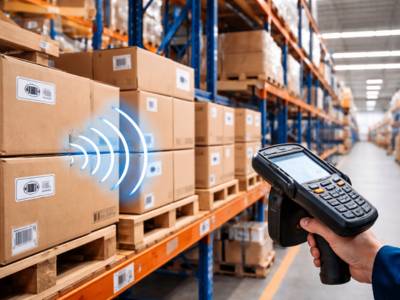
RFID technology for real-time inventory tracking |
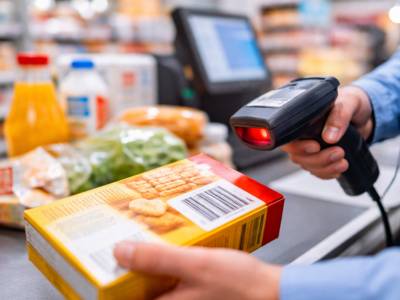
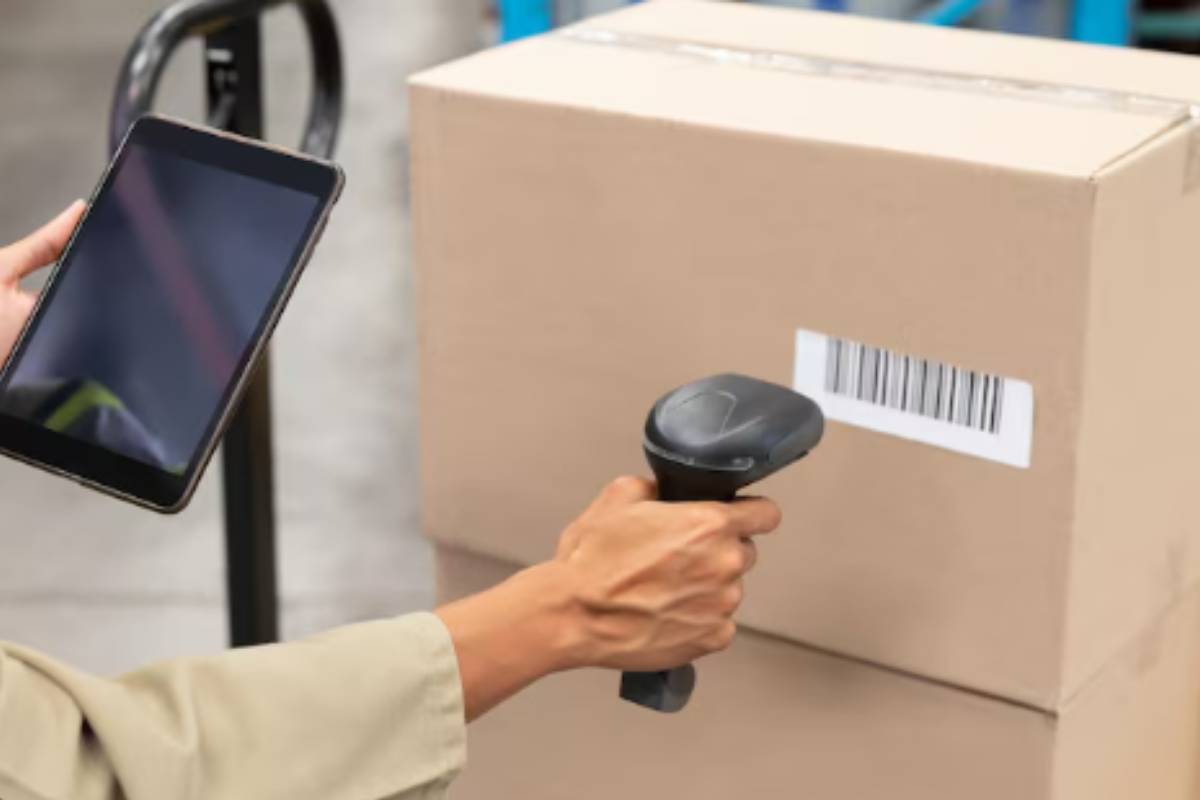
Barcode scanning for retail inventory |
4. Pros and Cons of Barcode
Pros
- Cost-effective to produce and deploy
- Simple to use and maintain
- Widely accepted across industries
Cons
- Line of sight required for every scan
- Limited data storage capacity
- Susceptible to damage and wear
When RFID is the Better Choice
RFID is ideal for businesses that need to track a large volume of items quickly and accurately. Manufacturing, warehousing, healthcare, and logistics benefit significantly from RFID technology. Salvonic supports enterprises in deploying RFID infrastructure that integrates seamlessly with ERP systems for scalable automation.
Industries that benefit from RFID:
- Manufacturing
- Warehousing
- Logistics
- Healthcare
- Retail for high-value goods
Additional Strategic Considerations
When analyzing RFID vs. Barcode: Which is Better for Your Business?, companies should assess scalability, automation requirements, and integration with digital infrastructure. Businesses planning long-term digital transformation often transition from barcode systems to RFID to enhance data visibility and operational intelligence.
Providers like Salvonic guide organizations through system comparison, deployment strategy, and performance benchmarking to ensure technology alignment with business goals.
Why Businesses Trust Salvonic for RFID Deployment
Choosing between RFID and barcode systems requires more than product comparison — it requires implementation expertise.
Salvonic provides:
- Enterprise-grade RFID infrastructure
- Industrial RFID readers and tags
- Seamless ERP integration
- Cross-industry deployment experience
- Scalable automation frameworks
Companies evaluating RFID vs. Barcode: Which is Better for Your Business? often consult Salvonic for performance benchmarking and ROI forecasting before transitioning from barcode-based systems to RFID-enabled automation.
Conclusion
Both RFID and barcode technologies offer unique advantages. RFID delivers superior speed, automation, and durability, while barcode systems remain affordable and practical for many business environments.
Ultimately, deciding RFID vs. Barcode: Which is Better for Your Business? depends on operational scale, tracking complexity, and long-term efficiency objectives. Businesses seeking advanced automation and real-time tracking increasingly adopt RFID systems with expert guidance from providers like Salvonic.
Frequently Asked Questions
What is RFID vs. Barcode: Which is Better for Your Business?
RFID vs. Barcode: Which is Better for Your Business? depends on operational volume, automation needs, and tracking complexity. RFID supports bulk scanning and real-time visibility, while barcode systems require manual scanning and line-of-sight.
Is RFID more efficient than barcode systems?
RFID systems offer faster scanning, bulk tag reading, and improved data accuracy compared to barcode systems, especially in warehouse automation and logistics.
Are barcode systems still relevant today?
Yes, barcode systems remain cost-effective and suitable for small-scale retail and office environments with lower throughput requirements.
Which industries benefit most from RFID?
Manufacturing, warehousing, healthcare, and logistics industries benefit most from RFID due to automation and durability advantages.
Should I consult an expert before choosing RFID?
Yes. Consulting experienced providers like Salvonic ensures proper system selection, ROI evaluation, and smooth integration.
Ready to Optimise Your Business Operations with RFID Technology?
Discover how RFID can outperform traditional barcode systems for faster tracking, real-time visibility, and automated data capture across your operations.
Partner with Salvonic to implement advanced RFID solutions for inventory tracking, asset management, supply chain visibility, and smart business automation.