RFID Animal Tracking India: How Livestock Tagging Works and Why It Matters for Farmers
RFID animal tracking India is one of the fastest-growing applications of Radio Frequency Identification technology in South Asia — driven by government mandates, livestock export requirements, dairy cooperative digitisation, and the urgent need for disease outbreak traceability across India’s 500-million-strong livestock population. Every year, animal diseases including foot-and-mouth disease (FMD), lumpy skin disease, and avian influenza cause thousands of crores in livestock losses across India. RFID animal tracking provides the individual identification layer that enables rapid outbreak containment, compensation verification, and vaccination compliance monitoring — making it not just an agricultural technology but a public health infrastructure investment.
RFID Animal Tracking India: The Scale of the Opportunity and the Government Push
India has the world’s largest livestock population — approximately 535 million animals across cattle, buffalo, sheep, goats, pigs, and poultry. Yet fewer than 5% of these animals carry any form of permanent, machine-readable individual identification. The Government of India’s National Livestock Policy (NLP 2013, updated 2024) mandates individual animal identification as a precondition for livestock insurance, disease compensation schemes, and export certification — creating a regulatory tailwind that is driving RFID animal tracking India deployments at state, district, and grama panchayat level.
The Pashu Aadhaar programme — a national livestock identification initiative — is creating unique 12-digit identification numbers for every bovine in India, with RFID ear tags serving as the physical carrier of this identity. The programme is currently operational across multiple states including Uttar Pradesh, Rajasthan, Gujarat, Andhra Pradesh, and Karnataka — creating immediate demand for quality, certified RFID animal ear tags and the readers needed to verify them in the field.
RFID animal tracking India is also driven by export requirements: beef and buffalo meat exports from India — valued at over ₹25,000 crore annually — require individual animal identification and traceability documentation from farm to slaughterhouse for compliance with EU, Gulf, and Southeast Asian import regulations.
RFID Livestock Tracking India: How the System Works from Farm to Market
RFID livestock tracking India systems create a cradle-to-market data chain for every individual animal, enabling traceability that was previously impossible with traditional paint brands, tattoos, or paper documentation. Here is how a complete livestock RFID system works:
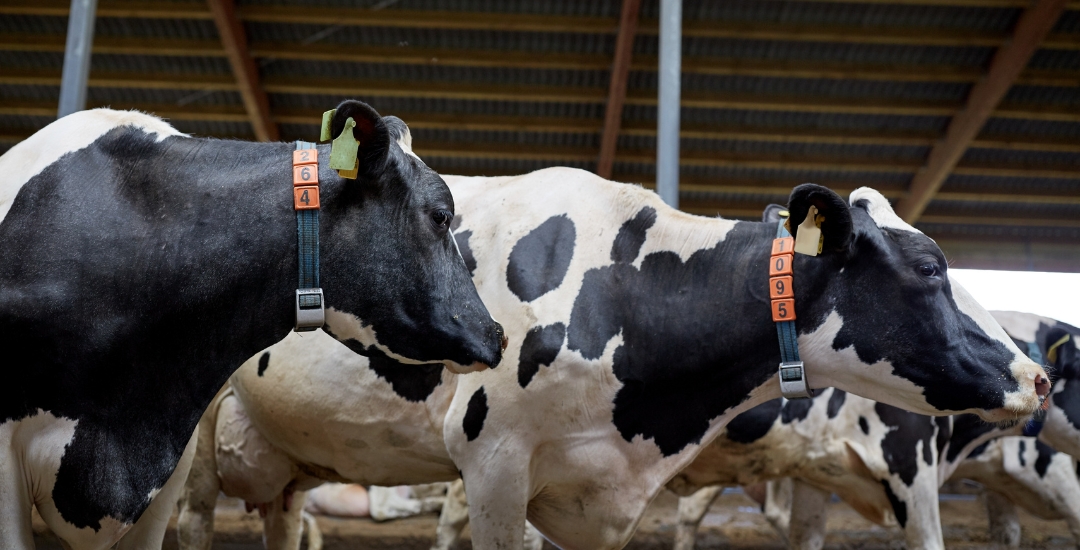
At birth or acquisition, each animal receives an RFID ear tag — a durable, flexible, biocompatible tag applied to the outer ear using a standard applicator tool. Each tag carries a unique EPC code that is registered in the national or state livestock database, linked to the animal’s species, breed, date of birth, owner, and farm location. From this point forward, every vaccination event, health examination, movement to a new farm, and market transaction is logged against this unique tag ID — building a complete individual animal health record.
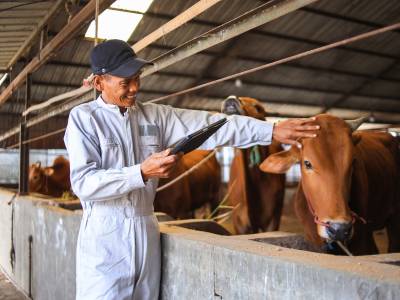
At vaccination camps and veterinary check-up points, a handheld RFID reader — such as Salvonic’s BOLT 61 — is used by the veterinarian or extension officer to read the animal’s tag and instantly pull up its vaccination history, due dates for next doses, and owner details from the livestock database. This eliminates the paper-based vaccination register that is prone to fraud, loss, and errors — a critical issue in livestock insurance claim processing.
The complete RFID livestock tracking India chain: Tag at farm → Read at vaccination camp → Read at inter-state movement checkpost → Read at livestock market → Read at abattoir/processing facility. At every step, the animal’s identity, health status, and movement history is instantly verifiable — providing the audit trail required for insurance claims, disease compensation, and export certification.
Animal Ear Tag RFID India: Types, Standards, and What to Look For
Not all animal ear tag RFID India products are equivalent. Understanding the technical specifications of an RFID ear tag is essential for any government body, dairy cooperative, or livestock farmer evaluating a deployment, because the tag’s performance in India’s outdoor agricultural environments directly determines whether the system works reliably or fails within months.
The critical specifications to evaluate in an animal ear tag RFID India product are: operating frequency (UHF 860–868 MHz or LF 134.2 kHz), read range (1–3 metres for UHF, 10–30 cm for LF), material (flexible biocompatible polyurethane), IP rating (IP68 for water and dust resistance), temperature range (-25°C to +70°C for outdoor Indian environments), and UV resistance for animals kept outdoors.
Salvonic’s UHF RFID animal ear tags are manufactured specifically for the harsh outdoor conditions of Indian livestock farming — flexible enough to conform to the curve of an animal’s ear without causing discomfort, UV-resistant for year-round outdoor use, and IP68-rated for the monsoon and mud environments of rural India. Each tag carries a unique EPC Gen2 code and is compatible with all UHF readers including Salvonic’s BOLT and FLASH range.
Government procurement under the Pashu Aadhaar programme specifies ISO 11784/11785 compliant LF tags for bovine identification, while the more advanced state programmes and private dairy cooperatives are increasingly adopting UHF animal ear tag RFID India for longer read ranges and faster bulk scanning capability.
Cattle RFID Tagging India: Dairy Cooperative and Milk Procurement Applications
Cattle RFID tagging India in dairy cooperative environments delivers an additional layer of value beyond individual identification — it enables automated, accurate, per-animal milk yield recording that is transforming the economics of India’s dairy sector. India is the world’s largest milk producer, with over 80% of milk produced by smallholder farmers with 2–5 animals. Dairy cooperatives — including Amul, Nandini, Sudha, and Milma — collect milk from millions of these small farmers daily at village-level collection centres.
With cattle RFID tagging India in dairy cooperatives, each cow’s ear tag is read automatically when she enters the milking parlour — instantly pulling up her production history, health record, medication withdrawal period status, and current lactation stage. The milking machine records the actual yield against her individual RFID identity, building a per-animal production record that enables breeders to identify high-yield animals, cooperatives to offer performance-based purchase prices, and insurance companies to assess herd value accurately.
For fodder management and breeding programmes, cattle RFID tagging India data enables precision feeding — ensuring that high-production animals receive appropriate nutrition supplementation based on their recorded yield history rather than average estimates. National Dairy Development Board (NDDB) is actively promoting RFID-based animal identification across its member cooperatives as part of the e-Gopala digital livestock marketplace infrastructure.
UHF RFID for Livestock Management: Technology Advantages Over Traditional Methods
UHF RFID for livestock management offers decisive technical advantages over the traditional animal identification methods still widely used in rural India — including paint brands, tattoos, notches, and plastic non-electronic tags. These traditional methods have three critical limitations: they degrade over time (paint fades, tattoos blur, notches are confused), they carry no electronic data (requiring manual cross-referencing with paper records), and they cannot be read at any distance (requiring the animal to be restrained for identification).
In contrast, UHF RFID for livestock management enables: reading at 1–3 metres without restraining the animal (critical for managing large herds), simultaneous reading of multiple tagged animals in a pen (for pen-level inventory verification), automatic logging to a mobile app or cloud platform (eliminating paper records), and integration with weighbridges, milk meters, and health monitoring sensors for automated data capture.
For fisheries — another important application of RFID animal tracking India — injectable RFID microchips and waterproof UHF tags are used to individually identify high-value farmed fish species including hilsa, rohu, and pomfret in aquaculture operations for export compliance.
Salvonic Products for RFID Animal Tracking India
Salvonic provides field-proven, India-certified hardware for RFID animal tracking India deployments across livestock, dairy, and aquaculture applications:
- UHF RFID Animal Ear Tags — flexible polyurethane, IP68, UV-resistant, biocompatible; compatible with standard ear tag applicator tools
- BOLT 61 Handheld UHF Reader — Android-based, Wi-Fi/Bluetooth, long battery life for full-day field operations; ideal for vaccination camps and market reading
- BOLT 62 Handheld UHF Reader — enhanced sensitivity for reading animals through mud and dense fleece at outdoor auctions
- FLASH Integrated Fixed UHF Reader — for pen portals and weighbridge entry points where automated individual animal identification is needed
- UHF RFID Wet Inlays — for OEM embedding in third-party tag housings and injectable bolus configurations
Conclusion
RFID animal tracking India is at an inflection point. Government mandates, cooperative digitisation, and export compliance requirements are converging to make individual animal identification with RFID not just beneficial but essential for any serious livestock operation. Salvonic’s Made-in-India ear tags and field-proven readers provide the hardware foundation for a system that works reliably from the Himalayan foothills to the coastal plains — wherever Indian livestock are raised, managed, and marketed.
FAQs About RFID Animal Tracking India
What is RFID animal tracking India and how is it used?
RFID animal tracking India uses Radio Frequency Identification to individually identify and track livestock — cattle, buffalo, sheep, goats, and poultry — using electronic ear tags that carry unique IDs. These tags are read by handheld or fixed RFID readers at vaccination camps, livestock markets, checkposts, and processing facilities, building a complete movement and health record for each animal from birth to sale. The system is used for disease traceability, insurance claims, export certification, and breeding programme management.
What does RFID livestock tracking India enable that traditional methods cannot?
RFID livestock tracking India enables instant, accurate, non-contact identification of individual animals at distances of up to 3 metres without restraining the animal — something no paint brand, tattoo, or visual tag can do. More importantly, RFID tags carry electronic data that links each animal to its complete history in a cloud or local database — vaccination records, health events, ownership changes, and production data — providing the audit trail required for livestock insurance, export certification, and disease outbreak investigation.
What type of animal ear tag RFID India is used in government programmes?
Government livestock programmes in India use two types of animal ear tag RFID India technology: LF (Low Frequency, 134.2 kHz) tags compliant with ISO 11784/11785 for the national Pashu Aadhaar programme, and UHF (Ultra High Frequency, 860–868 MHz) tags for state-level and cooperative programmes requiring longer read ranges. Salvonic supplies UHF RFID animal ear tags suitable for advanced livestock management applications including dairy cooperative milk recording and livestock export traceability.
How does cattle RFID tagging India help dairy farmers?
Cattle RFID tagging India helps dairy farmers and cooperatives in three direct ways: accurate individual milk yield recording per cow (enabling performance-based pricing), automated health record management (reducing paperwork and ensuring vaccination compliance for insurance eligibility), and breeding programme optimisation (identifying genetically superior animals by their production history). For dairy cooperatives, cattle RFID tagging eliminates fraudulent milk recording and enables precision management of large herds at village collection centres.
Can UHF RFID for livestock management work outdoors in Indian conditions?
Yes — UHF RFID for livestock management hardware from Salvonic is specifically designed for Indian outdoor agricultural environments. Animal ear tags are rated IP68 (fully waterproof), UV-resistant for year-round outdoor exposure, and made from flexible biocompatible polyurethane that withstands both the extreme heat of Rajasthan and the monsoon conditions of Kerala. Salvonic’s BOLT handheld readers are built for full-day field operations with long battery life and Android-based apps that work offline when mobile connectivity is unavailable.
What is the cost of an RFID animal tracking system in India?
The cost of an RFID animal tracking India system depends on herd size and deployment type. Individual animal ear tags from Salvonic are priced competitively for volume orders — with significant discounts for government and cooperative bulk procurement. Handheld RFID readers (Salvonic BOLT 61) required for field operations cost approximately ₹40,000–₹80,000 per unit depending on specifications. For government departments and dairy cooperatives conducting large-scale deployment under Pashu Aadhaar or state livestock schemes, Salvonic offers volume pricing and technical support for system integration with existing livestock databases.
Ready to Deploy RFID Animal Tracking for Your Livestock Programme or Dairy Operation?
Whether you are a state animal husbandry department implementing Pashu Aadhaar tagging, a dairy cooperative digitising milk recording, or a livestock exporter building EU-compliant traceability — Salvonic’s UHF RFID animal ear tags, handheld readers, and fixed readers provide the complete field-proven hardware for reliable animal identification at India scale.